
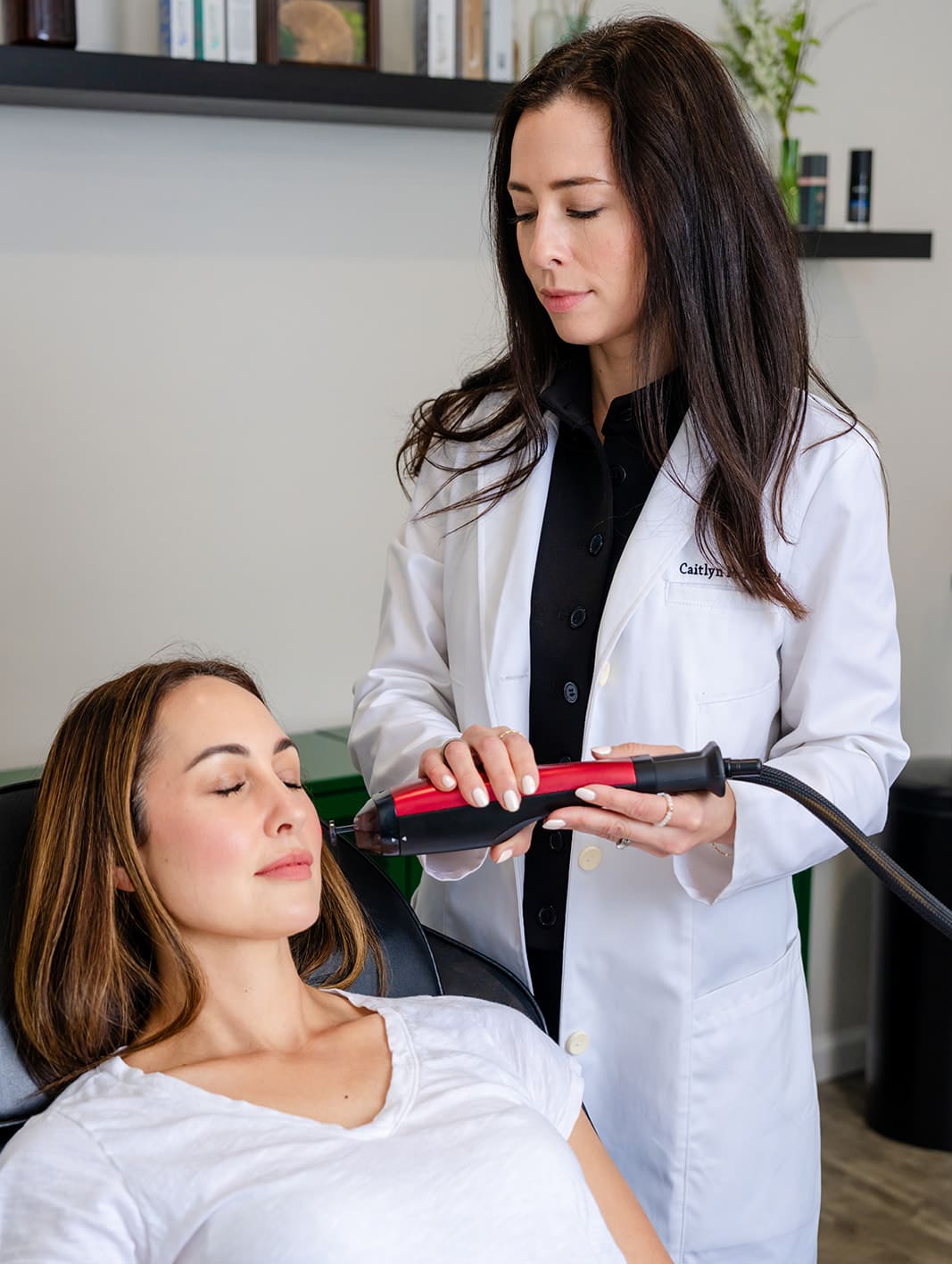
Before Your Treatment — Pre-Care Instructions
- Shave the treatment area 24 hours before — Shave the area to be treated the day before your appointment. Do not arrive with long hair — the laser targets the follicle, not the surface hair, and unshaved areas cannot be treated effectively and may cause surface burns.
- Avoid sun exposure and tanning — Stay out of direct sun and avoid tanning beds, self-tanners, and spray tans for at least 2–4 weeks before each session. Diode laser targets melanin — treating tanned skin significantly increases the risk of burns, blistering, and hyperpigmentation.
- No waxing, threading, or plucking — Avoid all hair removal methods that remove the root — waxing, threading, plucking, and depilatory creams — for at least 4–6 weeks before treatment. The hair root must be present in the follicle for the laser to work. Shaving is the only acceptable method between sessions.
- Cleanse and arrive product-free — On the day of your appointment, the treatment area should be clean and free of lotions, deodorant, makeup, perfume, or any other products.
- Avoid active skincare on the area — Stop applying retinol, AHAs, BHAs, and exfoliating products to the treatment area for at least 3–5 days before your appointment.
- Avoid blood-thinning medications if possible — If medically safe to do so, avoid aspirin and ibuprofen for 24–48 hours before treatment to reduce the risk of bruising or sensitivity.
- Stay well hydrated — Drink plenty of water in the days leading up to your appointment — well-hydrated skin responds better to laser treatment.
- Disclose medications & conditions — Inform your provider of any medications (especially photosensitizing drugs such as certain antibiotics, retinoids, or acne medications), skin conditions, hormonal conditions, PCOS, or recent sun exposure. Certain medications and conditions can affect candidacy or require adjusted settings.
After Your Treatment — Post-Care Instructions
- Expect redness and mild swelling — Redness, mild swelling, and a sensation similar to a mild sunburn around the treated follicles are completely normal immediately after treatment and typically resolve within a few hours to 24 hours.
- Apply a cool compress if needed — If the area feels warm or uncomfortable, apply a clean cool compress or chilled gel pack (not ice directly on skin) for 10–15 minutes to soothe the skin.
- Keep the area clean and moisturized — Gently cleanse the treated area and apply a fragrance-free, soothing moisturizer or aloe vera gel to keep skin calm and hydrated.
- Apply SPF every day — Treated skin is more sensitive to UV damage after laser hair removal. Use SPF 30–50 on any exposed treatment areas daily and reapply every 2 hours when outdoors.
- Avoid heat for 24–48 hours — Skip hot showers, baths, saunas, steam rooms, and intense exercise for at least 24–48 hours after treatment to prevent irritation, folliculitis, and increased sensitivity.
- Do not wax, thread, or pluck between sessions — Between appointments, shaving is the only acceptable hair removal method. Waxing, threading, or plucking removes the hair root and will interfere with the effectiveness of your next treatment.
- Expect hairs to shed — In the 1–3 weeks following treatment, treated hairs will shed naturally as the follicles release them. This is normal and a sign the treatment worked. You can gently exfoliate after 1 week to help the process along.
- Avoid perfumed products on treated areas — Skip fragranced lotions, deodorants, and body sprays on treated areas for at least 24–48 hours as these can cause irritation on sensitized skin.
- Stay consistent with your sessions — Diode laser hair removal requires multiple sessions to target hair in all growth phases. Sessions are typically spaced 4–8 weeks apart depending on the treatment area. Skipping or delaying sessions reduces overall effectiveness.
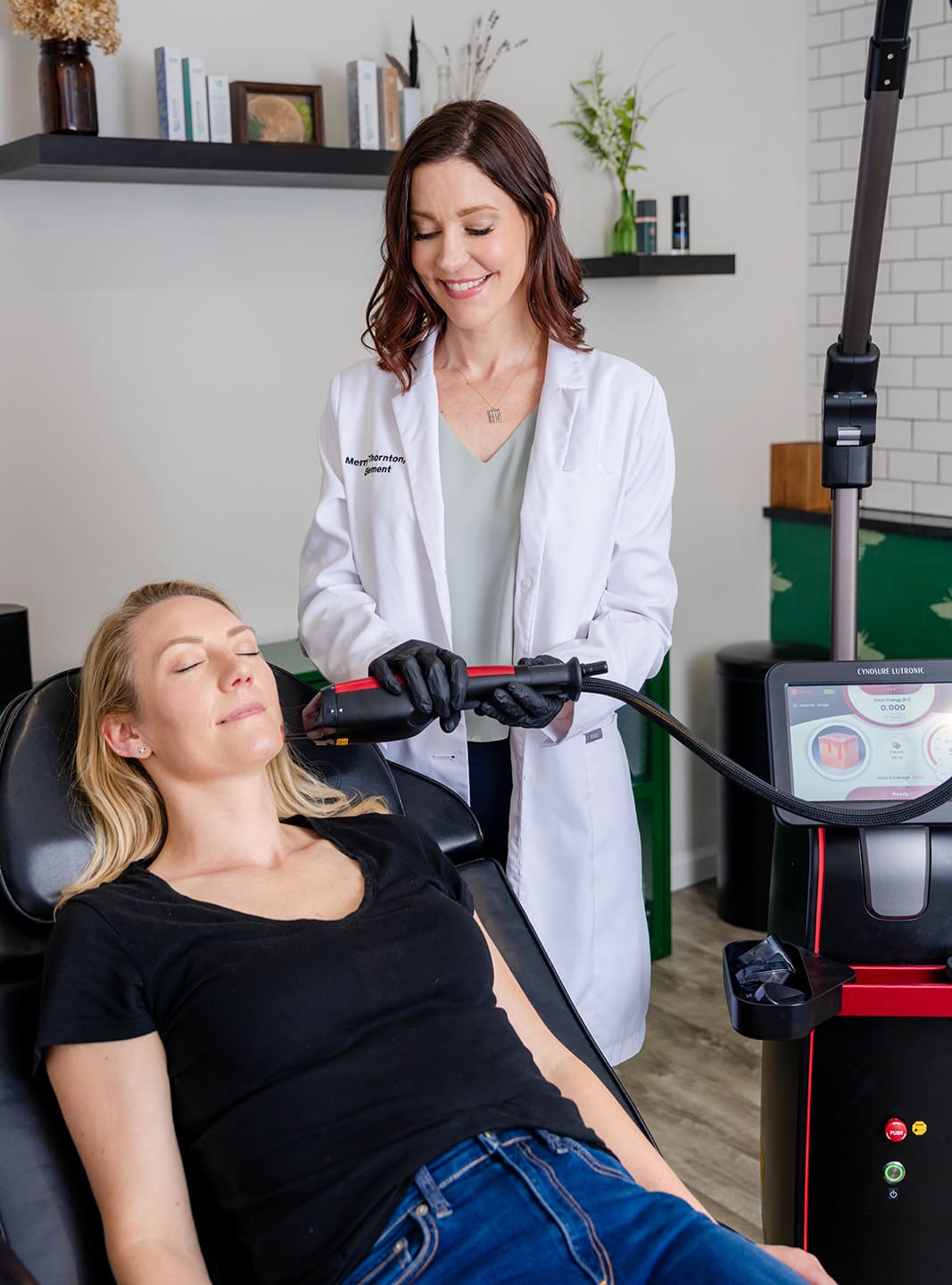
Contact your provider immediately if you experience:
- Blistering, burns, or open skin in the treated area
- Signs of infection: increasing redness, warmth, swelling, pus, or fever
- Significant or worsening hyperpigmentation or skin discoloration
- Unusual crusting or scabbing beyond 48 hours
- Any skin changes or symptoms that concern you
Laser hair removal is a process, not a one-time treatment. Hair grows in cycles, and each session targets only the follicles in the active growth phase. Most clients need 6–8 sessions for significant, lasting reduction, with occasional maintenance sessions thereafter. Consistency between appointments — especially avoiding waxing and threading — is the single biggest factor in achieving optimal results.