
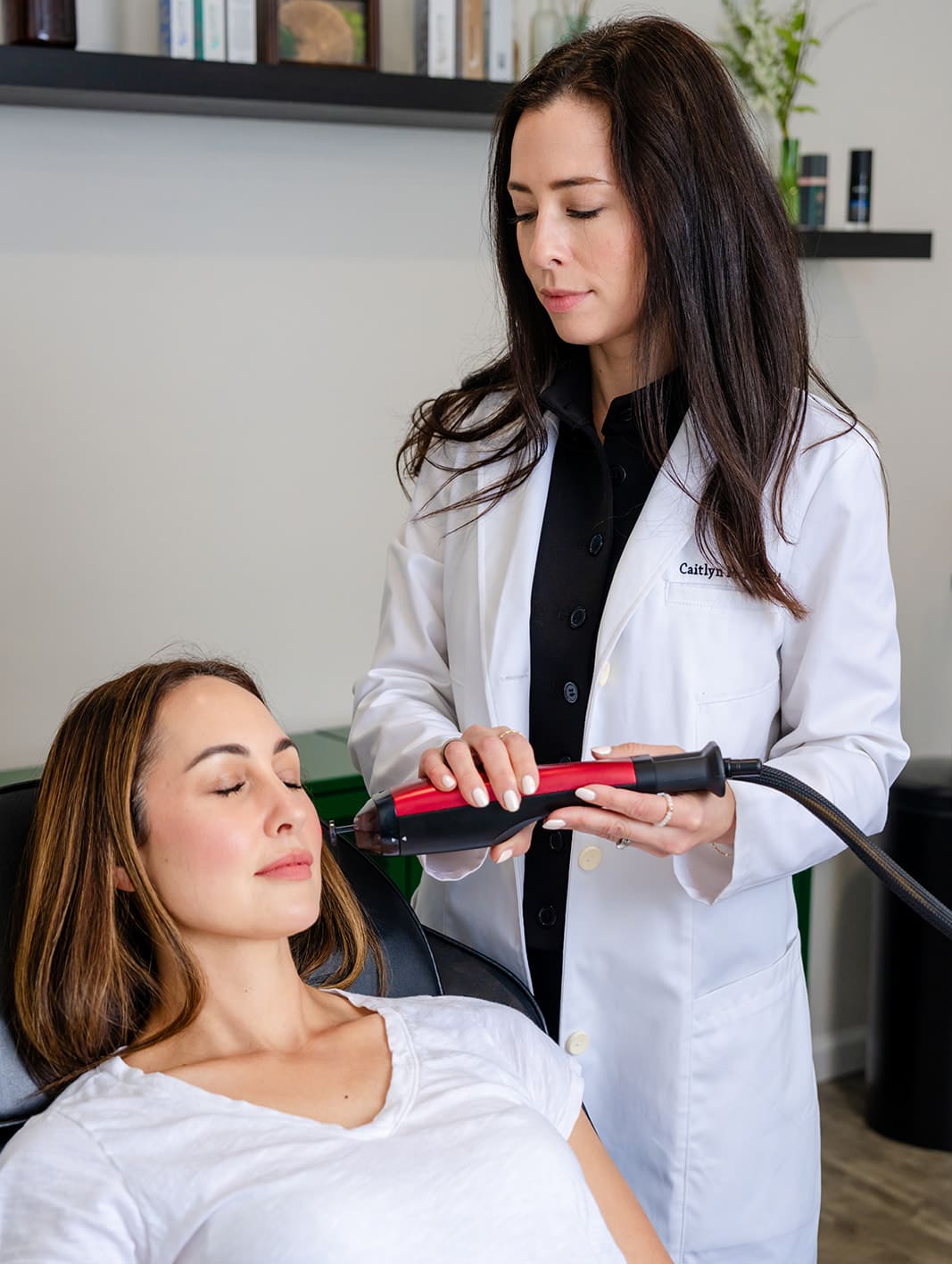
Before Your Treatment — Pre-Care Instructions
- Sun protection is non-negotiable — Strict sun avoidance is the single most important factor in melasma treatment. Avoid direct sun exposure and tanning beds for a minimum of 4 weeks before each session and throughout your entire treatment period. Even brief UV exposure can trigger a melasma flare and significantly reduce results.
- Use SPF daily in the weeks before treatment — Apply a broad-spectrum SPF 30–50 every morning and reapply every 2 hours when outdoors in the weeks leading up to your appointment. Wear a wide-brimmed hat whenever outside. Mineral-based sunscreens (containing zinc oxide or titanium dioxide) are especially recommended for melasma-prone skin.
- Pre-treat if advised — Your provider may prescribe a pre-treatment protocol including hydroquinone, a retinoid, azelaic acid, or a combination regimen. Following this protocol consistently for the recommended period before treatment significantly improves outcomes.
- Discontinue active ingredients before your appointment — Stop retinol, tretinoin, AHAs, BHAs, benzoyl peroxide, and all exfoliating products for at least 5–7 days before your treatment session.
- Avoid hormonal triggers if possible — Melasma is often hormonally driven. Discuss with your provider and healthcare professional whether oral contraceptives or hormone replacement therapy may be contributing to your melasma, as laser treatment alone may have limited long-term results without addressing hormonal triggers.
- Avoid heat in the days before treatment — Heat is a known melasma trigger. Avoid saunas, steam rooms, hot yoga, and prolonged heat exposure in the days leading up to your appointment.
- Arrive with a clean face — Come with no makeup, sunscreen, or skincare products on the day of your appointment.
- No other skin treatments on the area — Avoid chemical peels, microneedling, waxing, and other laser or light-based treatments for at least 2–4 weeks beforehand.
- Disclose full medical history — Inform your provider of all medications (especially photosensitizing drugs, hormonal therapies, or oral contraceptives), skin conditions, pregnancy or breastfeeding status, and any previous melasma treatments. Melasma treatment is not recommended during pregnancy.
After Your Treatment — Post-Care Instructions
- SPF is your most important post-care step — Apply SPF 30–50 immediately once your skin has settled after treatment and every single morning thereafter, without exception. Reapply every 2 hours when outdoors. A single unprotected sun exposure can undo results and cause a melasma rebound that is worse than before treatment.
- Avoid all heat — Heat is one of the most significant melasma triggers. Avoid saunas, steam rooms, hot yoga, hot showers, and prolonged outdoor heat exposure for at least 1–2 weeks post-treatment and as an ongoing lifestyle habit.
- Expect mild redness and sensitivity — Some redness, mild swelling, and sensitivity in the treated area are normal immediately after treatment and typically resolve within 24–48 hours.
- Keep skin calm and moisturized — Apply a gentle, fragrance-free moisturizer to keep the skin barrier supported. Avoid any products that could irritate sensitized skin during the healing period.
- Do not pick or rub the area — Avoid touching, rubbing, or scratching the treated area. Any post-inflammatory response can worsen pigmentation in melasma-prone skin.
- Pause all active skincare — Hold off on retinol, AHAs, BHAs, vitamin C, and all exfoliants for at least 5–7 days post-treatment, or until your provider advises it is safe to reintroduce.
- Continue any prescribed topical regimen — If your provider has prescribed a maintenance regimen including hydroquinone, azelaic acid, or a retinoid, resume as directed once your skin has healed — typically after 5–7 days. Consistent use of prescribed topicals between sessions is essential for managing melasma long-term.
- Avoid heat-generating exercise — Skip intense workouts, hot yoga, and activities that raise your core body temperature for at least 48–72 hours post-treatment.
- Wear a wide-brimmed hat outdoors — Physical sun protection — a wide-brimmed hat worn every time you step outside — is as important as SPF for melasma management and must become a daily habit throughout and beyond your treatment course.
- Attend all sessions and follow-up appointments — Q-switch laser for melasma is typically administered in a series of low-fluence sessions spaced 2–4 weeks apart. Consistency across sessions and diligent at-home care between appointments is essential for results.
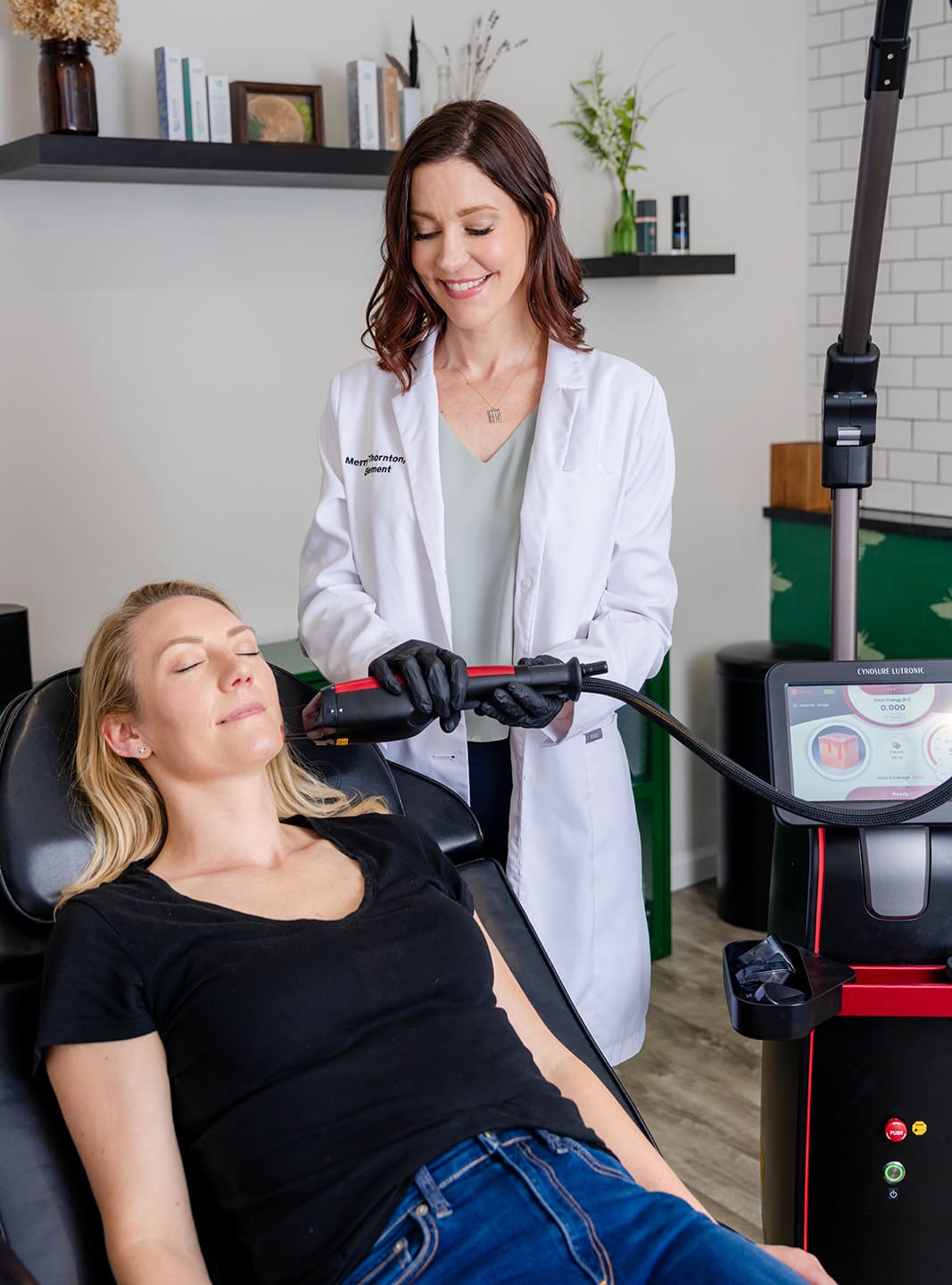
Contact your provider immediately if you experience:
- Significant worsening of pigmentation or a sudden melasma flare after treatment
- Blistering, burns, or open skin in the treated area
- Signs of infection: increasing redness, warmth, pus, or fever
- Hypopigmentation — new areas of skin that appear lighter or white
- Raised scarring or unusual skin texture changes
- Any skin changes or symptoms that concern you during healing
Melasma is a chronic condition, not a one-time fix. Laser treatment is one part of a comprehensive management approach that must include strict daily sun protection, heat avoidance, prescribed topical maintenance, and — where applicable — addressing hormonal triggers. Without these lifestyle commitments, melasma is very likely to return. Your provider will work with you to build a long-term plan that supports lasting improvement.